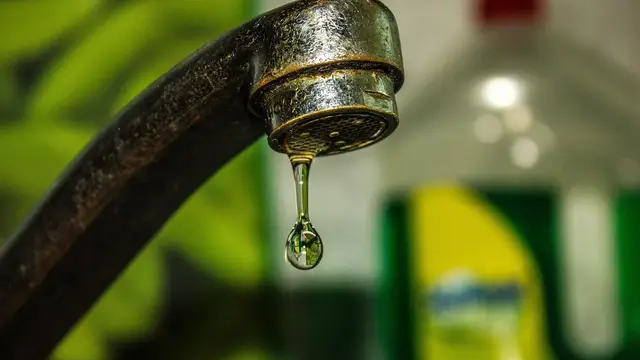
When should you call about leak repair?
Some leaks show themselves right away. Others stay hidden for months and appear first as a higher bill or a stain. These signs in a Dallas home suggest it is time for a plumber to take a look.
- Your water bill climbs for no clear reasonIf your habits have not changed but the bill keeps rising, water may be escaping from a line you cannot see, such as one inside a wall or beneath the floor.
- The meter keeps moving with everything offShut off every faucet, appliance and outdoor hose, then watch the meter. If the dial or leak indicator still moves, water is leaving the system somewhere between the meter and your fixtures.
- Stains, bubbling paint or swollen floorsBrown rings on a ceiling, paint that bubbles or baseboards that swell often mean water is coming from a pipe, drain or fixture above or behind that spot.
- A damp cabinet or musty smellA sink base that stays wet, or a closet with a musty odor beside a bathroom wall, can point to a slow drip at a drain joint or a supply valve.
- Warm spots on the floorA warm patch on tile or concrete can mean a hot water line under the slab is leaking. A leak like this should be located before any part of the floor is opened.
- Running water sounds with nothing onIf you hear water moving through the walls while every fixture is off, a line may be under pressure and failing somewhere out of sight.
What are your leak repair options?
The right repair depends on where the leak is, what the pipe is made of and how much of the system is aging. The options below run from the smallest job to the largest.
Fixture and valve repair
Many leaks start with parts that wear out. Faucet cartridges, washers, toilet flappers, fill valves and the small shutoff valves under sinks are common culprits. In most cases the fix is a replacement part rather than a whole new fixture, so the visit is quick and the cost stays low. If parts are hard to find or the fixture leaks in several places, replacing the fixture may make more sense.
Best for: Drips, running toilets and leaks visible at a sink or toilet
Spot pipe repair
A plumber cuts out the damaged section and joins in a new piece with fittings that match the existing pipe. This suits a pinhole, a cracked fitting or a section that split after freezing, and it needs only a small opening. The drawback is that it repairs one spot. If the rest of the pipe is corroded, more leaks may appear in other places over time.
Best for: One damaged section in pipe that is otherwise sound
Slab leak repair
When a water line under a concrete floor leaks, there are several ways to reach it. The plumber may break through the slab at the leak, tunnel beneath it from outside, or reroute the line through walls or the attic and shut off the old run. Rerouting often causes less floor damage. The best path depends on where the leak sits and how sound the pipe is around it.
Best for: Hot or cold lines leaking beneath a concrete floor
Repiping
Repiping replaces most or all of the supply lines in a house. It is a larger job that needs openings in walls and ceilings, and those areas are patched afterward. It tends to make sense when pipes are old galvanized steel or polybutylene, when water runs rusty, or when leaks keep appearing in different places. The cost is higher up front, but it can end a cycle of repeat repairs.
Best for: Homes with aging pipes and repeated leaks
What affects the cost of a leak repair job in Dallas?
Leak repair prices depend less on the fix itself and more on finding the leak and getting to it. The factors below affect cost the most. A written quote from Test Starter Plumbing, given after the leak is found, is the clearest way to learn what your Dallas home will need.
| What it is | Why it matters | Effect on price |
|---|---|---|
| Finding the leak | Hidden leaks may need pressure testing, listening tools or a thermal camera before anything is opened. | High |
| Location of the pipe | A pipe under a sink is easy to reach. One inside a finished wall, a ceiling or beneath a slab takes more time and more repair work. | High |
| Repair, reroute or repipe | A single spot repair costs less than new lines, but repeat leaks can make a larger job the better value. | High |
| Pipe material | Copper, PEX, CPVC and galvanized steel each need different fittings. Old pipe may need a longer section replaced. | Medium |
| Opening and patching | Cutting into and closing walls, ceilings or tile adds labor. Some plumbers patch the opening while others leave it to another trade. | Medium |
| Water damage | Wet drywall, flooring or insulation may need drying or replacement, which is often handled apart from the plumbing work. | Medium |
Comparing quotes: When you compare quotes, check whether each one covers finding the leak, the repair itself, opening and patching, and cleanup. Ask how extra work is priced if more worn pipe turns up after a wall is opened.
How does a leak repair job work, step by step?
A leak repair visit follows the same basic path no matter where the leak is hiding.
- Describe what you seeExplain the stain, sound, high bill or drip. Photos help Test Starter Plumbing bring the right tools and parts to your home in Dallas.
- Locate the leakThe plumber checks the meter, fixtures and exposed pipes, then uses pressure tests or listening tools on hidden lines to narrow down the spot before anything is opened.
- Review the optionsYou learn what is leaking, why it failed and the ways to fix it. You receive a written price for the option you choose before work begins.
- Shut off and protectWater to the area is turned off. Floors and belongings are covered, and only the opening needed to reach the pipe is cut.
- Repair and testThe damaged part or pipe section is replaced, water is restored, and the repair is checked under pressure for drips.
- Walk through the fixThe plumber shows you the repair, points out other worn parts and explains what patching or drying is still needed.
Permits, inspections and warranties in Dallas
Small leak repairs, such as replacing a valve, a faucet part or a short run of pipe, usually do not need a permit. Larger work, like rerouting a line, repiping a house or working on the main water line, often does. Rules vary, so check with the building department that covers your Dallas address, or ask the plumber to confirm before work starts.
When a permit is required, an inspector may look at new pipe before walls are closed. Keep the permit and the invoice with your home records. They can help show the work was done properly when you sell the property.
Ask whether a workmanship warranty is offered, and get the terms in writing, including what it covers and for how long. Valves and pipe often carry the manufacturer's own warranty too. If water damage is involved, photograph it before repairs begin and contact your home insurer early, since sudden leaks and slow leaks are often handled differently.
How to choose a plumber for leak repair in Dallas
A good leak repair plumber finds the cause before cutting into anything, explains the options in plain words and puts the price in writing.
What to check
- A clear plan for finding the leak before walls or floors are opened
- A written price for the repair you choose, given before work starts
- Proof of insurance, and a plumbing license where your state requires one
- Experience with your pipe type, such as copper, PEX or galvanized steel
- A straight answer on whether patching walls or floors is included
- Clear written terms for any workmanship warranty
Questions to ask
- How will you find the leak, and will you need to open a wall or floor?
- Is it better to repair this spot or replace the whole line?
- What type of pipe do I have, and is it likely to leak again?
- Is patching the opening included in the price?
- Will this repair need a permit, and who pulls it?
- What does your workmanship warranty cover, and for how long?
Leak Repair questions in Dallas
How do I know if I have a hidden leak?
Turn off every faucet and water-using appliance, then check the water meter. If the dial or leak indicator moves over the next half hour, water is escaping somewhere. A rising bill, damp spots and the sound of running water are other clues.
Is a dripping faucet worth fixing right away?
Usually yes. A steady drip wastes water, can stain the sink and often signals a worn part that will only get worse. Many drips are fixed with a new cartridge or washer in a short visit.
What is a slab leak?
A slab leak is a leak in a water line that runs beneath a concrete floor. Signs include warm spots on the floor, the sound of running water, cracked flooring and a meter that moves when nothing is on. It should be located with testing before the floor is opened.
Will homeowners insurance pay for a leak?
That depends on your policy and the type of leak. A sudden break is often treated differently from a slow leak that went on for months. Take photos, stop the water and ask your insurer what is covered before repairs start.
Does fixing a leak mean cutting open my wall?
Not always. Leaks at fixtures and exposed pipes are repaired without opening anything. For hidden leaks, testing narrows the spot so only a small opening is needed. Test Starter Plumbing can explain the plan for your Dallas home before any cutting starts.
Should I repair the leak or repipe the whole house?
If the pipes are sound and this is the first leak, a spot repair is often enough. If the pipes are old galvanized steel, leaks keep appearing in different places, or the water looks rusty, repiping may save money and stress over time.
Why does my toilet refill by itself?
The flapper at the bottom of the tank is often worn, or the fill valve is set too high. Water slips into the bowl, and the tank keeps topping itself up. Both parts are low in cost and quick to replace.
How long does a leak repair take?
Visible leaks are often fixed in an hour or two. Hidden leaks take longer because the leak must be found first. Slab leaks and reroutes can take a day or more. The plumber can give a better estimate once the spot is located.
Do I need to be home during the visit?
It helps to be there to describe the symptoms and review the written price before work begins. Make sure the plumber can reach the area, keep pets secured and move valuables away from the work.
What should I do while I wait for the plumber?
If you know where it is, shut off the water at the fixture or the main valve. Move rugs, furniture and electronics out of any wet area. Take photos of the damage for your records and your insurer.